In the world of controlled-environment agriculture, few setups demonstrate the elegance of circular biology like the “pump and dump” aquaponics system. At its core, this design is beautifully simple: a pump drives nutrient-rich water from a fish tank up into a series of grow beds. Once the water level in the bed hits a pre-set drainage point—often triggered by a bell siphon or a simple timer—the water rushes back down into the fish tank.
For many enthusiasts, the focus is entirely on the fish and the plants. However, seasoned operators have discovered a “secret” diagnostic tool that provides a real-time health report for the entire apparatus: monitoring the return flow of the water. By observing the dynamics of the water returning to the fish tank, you can gain a complete understanding of how your system is functioning without needing a dozen expensive sensors. It is a masterful example of observational engineering, where a single measurement tells the whole story.
The Five Pillars of Return Flow Diagnostics
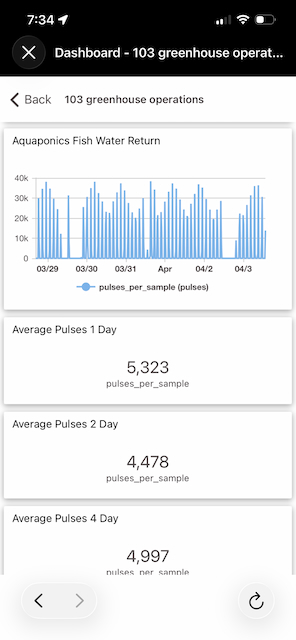
It is truly surprising how much intel can be gathered by simply watching the water return to the main reservoir. When you monitor the frequency, volume, and velocity of the drainage, you uncover five essential metrics of system health:
1. Verifying System Operation The most basic function of the return flow is binary: is the pump running? If the return pipe is dry, you have an immediate notification that your pump has failed, a fuse has tripped, or the power is out. It is the quickest “at-a-glance” check for a system manager.
2. Identifying Cycle Frequency In a pump and dump system, the health of the nitrifying bacteria and the oxygenation of the roots depend on the hydration cycle. By timing how often the return flow triggers, you can verify that your timers or siphons are operating within the desired parameters. If the cycle is too fast, you risk water-logging the roots; if it’s too slow, you might be starving the plants of nutrients.
3. Measuring Total Water Throughput The volume of the returning water acts as a proxy for the system’s total health. If you notice the return flow is consistently lower than usual over several cycles, it’s a clear indication that your pump’s flow rate has dropped, perhaps due to a buildup of organic matter or lime scale in the supply lines, or even a leak in the plumbing.
4. Detecting Blockages (The “Rock” Factor) One of the most common issues in any fluid system is a foreign object obstruction. Whether it is a piece of loose gravel from the grow media or a wayward plant leaf, blockages happen. When observation shows a stuttering or interrupted return, it is almost always indicative of a physical obstruction. In the attached image, you can see the system operating perfectly, followed by a dramatic drop-off in flow. Upon inspection, a small rock was discovered lodged in the return pipe. Detecting this early prevented what could have been a catastrophic overflow in the grow bed.
5. Assessing Rootbound Conditions Perhaps the most sophisticated data point you can derive from return flow is the state of the plants themselves. As roots grow and occupy more space in the grow media, they naturally impede the flow of water. If you notice a gradual, steady increase in the time it takes for a bed to drain—or a decrease in the volume of water returning—it is a strong signal that the root mass has become dense. This informs the operator that it is nearly harvest time or that it is time to prune back the root systems.
Applying the “Flow Insight” Model to Cattle Ranching
The brilliance of this diagnostic model isn’t limited to the greenhouse. If we apply this same logic to the downhill troughs used in cattle ranching, the potential for improved efficiency is immense.
Consider a ranch where water is gravity-fed from a header reservoir down to multiple cattle troughs across various pastures. Currently, most ranchers have to physically inspect each trough to see if the intake valves are operating correctly. However, if we placed a simple flow-monitoring sensor on the return lines or the discharge points of these troughs, we could apply the same diagnostic “philosophy” used in aquaponics.
By observing the flow data from those troughs, a rancher could verify:
- Leak Detection: Did a seal fail in a remote pasture?
- Float Valve Health: Is the trough overflowing or failing to fill?
- Line Integrity: Is there a clog or mineral buildup in the pipes leading to the troughs?
- Cattle Consumption Patterns: Does the rate of usage correlate with weather patterns or herd size?
Just as a rock in an aquaponics setup can be caught by tracking flow, a malfunctioning float valve in a cattle trough could be identified from the home office long before the cattle show signs of, or suffer from, dehydration.
Conclusion: Trust the Flow
The key takeaway for any operator—whether you are growing lettuce or raising livestock—is that movement is information. By focusing on the water that has already done its job and is returning to the source, you can catch problems before they scale into disasters.
We often complicate agricultural management with expensive arrays of monitors and complex feedback loops. But as the “rock in the pipe” incident reminds us, there is no substitute for understanding the baseline behavior of your system. Once you know what “normal” looks like, the deviations become your most valuable data.
In your aquaponics system, the next time you see that water return to the tank, pay attention. It is telling you exactly how hard your system is working, how healthy your roots are, and whether or not there is a pebble somewhere waiting to cause trouble. Keep your eyes on the flow, keep your systems clean, and your yields—whether of tilapia, basil, or healthy calves—will undoubtedly improve. Small observations lead to big results; all it takes is a keen eye and a bit of focus on the return line.
0 Comments