In the world of modern orcharding, water is the lifeblood of production. However, understanding exactly how much water your trees are receiving—and how much they are actually retaining—is a complex challenge. By leveraging LoRaWAN technology to create time-correlated data streams, growers can transform their orchards from intuition-based operations into precision-engineered landscapes.
The Power of Time-Correlated Data
When you integrate soil moisture sensors with a reliable rain gauge, like the BearMar LoRaWAN system, you are doing more than just collecting numbers; you are creating a digital ledger of your orchard’s health.
LoRaWAN devices operate by sending short, energy-efficient “chirps” to a gateway. Each of these transmissions is timestamped and stored in a centralized database. Because every data point carries a precise temporal tag, IT and agricultural software can synchronize different sensor types into a single, cohesive timeline.
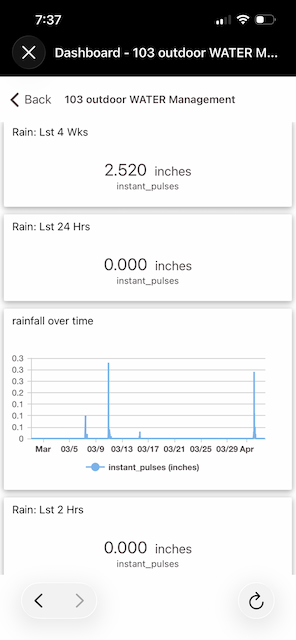
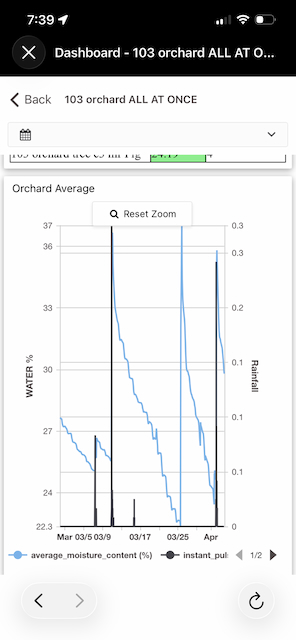
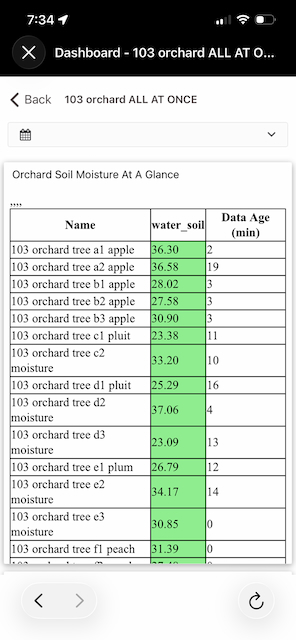
Here are three key reasons why this time-correlation is revolutionary for orchard management:
1. Quantifying Effective Precipitation
Not all rain is “effective” rain. By correlating rainfall data with soil moisture sensors, you can see exactly how much of a localized shower actually reached the root zone versus how much evaporated from the canopy or surface. If rain occurs but moisture levels remain stagnant, you know your orchard is dealing with crown interception or excessive runoff, prompting necessary adjustments to your irrigation schedule.
2. Identifying Infiltration Lag
Time-correlation allows you to measure the latency between a precipitation event and the subsequent spike in moisture at specific depths. This “infiltration lag” tells you about the soil structure and hydraulic conductivity of your orchard floor. Monitoring this over time helps you recognize when soil has become compacted or when surface crusting is preventing water from reaching deep roots.
3. Optimizing Automated Irrigation Cycles
The ultimate goal of any orchard manager is to prevent over-watering while ensuring maximum yield. With correlated data, you can trigger irrigation cycles only when the moisture deficit is confirmed. By observing the soil’s “drawdown” rate against the timeline of rain events, you can create a model that automatically pauses your irrigation system precisely when the ground has sufficient saturation.
Deep Roots and Smart Sensors
While BearMar champions reliable, lower-cost soil moisture sensors that provide excellent surface-level performance, the beauty of the LoRaWAN ecosystem is its modularity. Growers with demanding requirements can easily integrate deep-penetration sensors, such as those from SensoTerra.
When data from these deep-root sensors is timestamped and aligned with surface rainfall data, the result is a full-profile view of the orchard’s water status. You stop guessing what is happening at twelve inches or twenty-four inches below the surface; you gain empirical evidence of your root zone’s hydration.
By bringing these disparate data streams together in a timestamped database, BearMar enables producers to control water usage with surgical precision. This reduces waste, optimizes electricity costs, and ensures that every drop of water—whether from the sky or the irrigation line—is working to grow your harvest.
0 Comments