Beyond the Return Flow: Addressing the “Stuck Pump” Hazard in Aquaponics
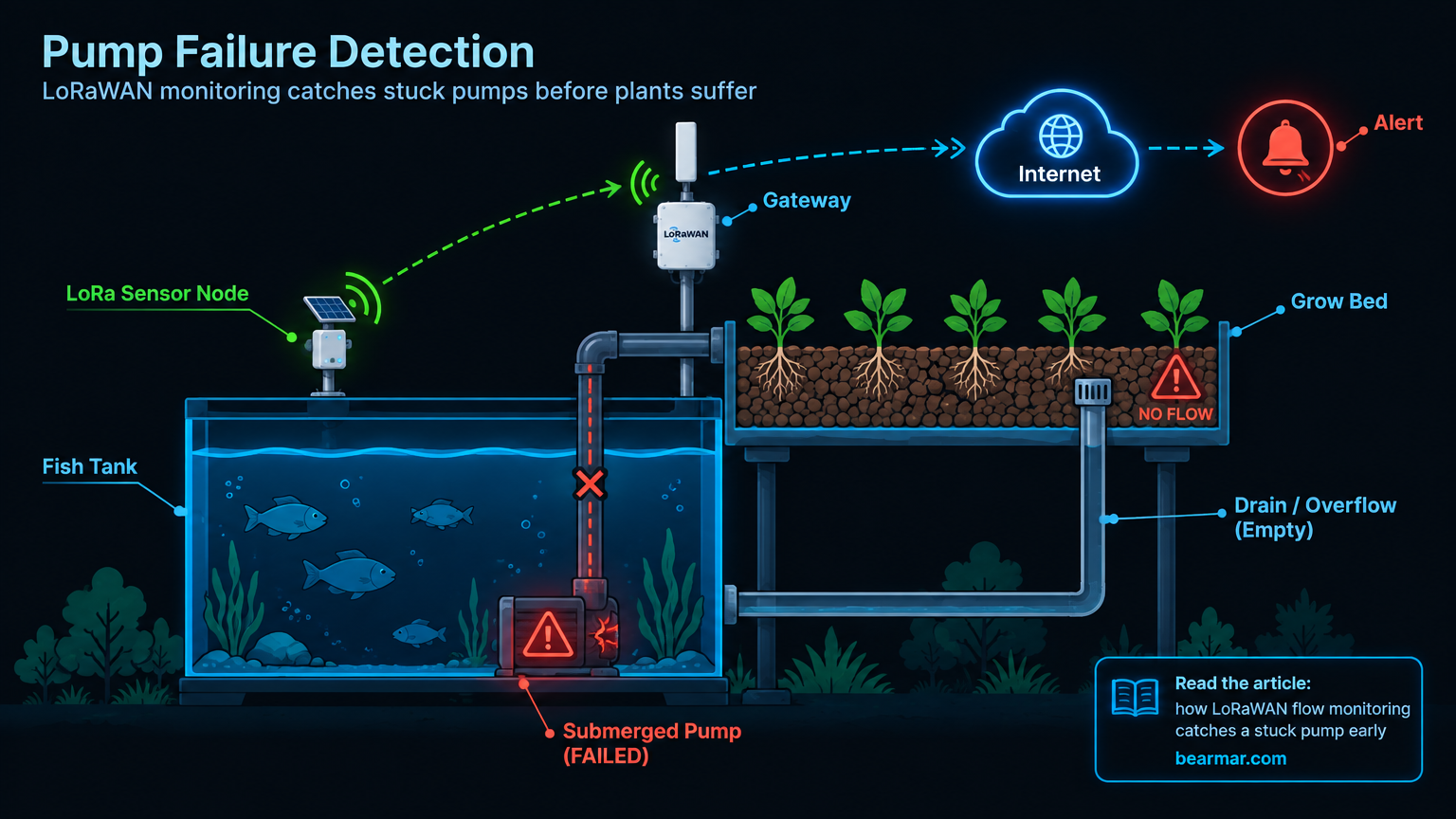
In a previous discussion on optimizing aquaponics efficiency, we explored the “Flow Insight” model—the art of using return flow monitoring to diagnose everything from root density to pipe blockages. However, as any veteran operator knows, a system that works perfectly is only half the battle. The other half is preparing for when it fails.
While return flow monitoring is a powerful diagnostic tool, it revealed a blind spot in my own operation: the “Stuck On” Pump Scenario.
In most flood-and-drain systems, a pump is programmed to cycle. When a pump sticks in the “on” position, it bypasses your management strategy and turns your controlled environment into a liability. Below, I break down why this failure is critical and how you can harden your system against it.
The Fourfold Danger of a Stuck Pump
When your pump refuses to turn off, you aren’t just dealing with a minor inconvenience; you are creating a cascading failure:
- Wasted Water Chemistry: Aquaponics is a delicate balance of nitrogen cycles. An endless flow through the grow media can lead to nutrient leaching, potentially upsetting the specific pH and nutrient balance you’ve worked to maintain.
- Endangering the Fish: If your sump tank is designed for a specific volume, an uncontrolled pump can pump your fish tank dry, leading to fish stress, oxygen depletion, or physical injury as the water level drops below the pump intake.
- Equipment Fatigue: Pumps are designed for duty cycles, not continuous operation beyond their rating. A stuck pump can lead to overheating, shortened motor life, and potential electrical faults.
- Summer Heat Stress: In the heat of a Texas summer, water temperature is your greatest enemy. If the pump remains stuck on, the increased circulation and potential heat transfer from the motor into the water can push your system toward lethal temperatures for both your crops and your fish.
Remedial Actions: Hardening the System
After identifying the “stuck pump” vector, I moved to integrate both mechanical fail-safes and advanced digital monitoring to ensure my system is resilient:
- Mechanical Safety Float Valves: Electronics fail; physics doesn’t. Installing a mechanical float valve in the fish tank is your last line of defense. If the water level drops below a critical threshold due to a pump failure, the valve physically cuts the loop or triggers an overflow bypass, ensuring the fish always have a minimum safe water volume.
- Enhanced LoRaWAN Alerts: I’ve refined my LoRaWAN setup to specifically monitor for “flow duration.” By setting up an alert that triggers if the return flow sensor registers movement for longer than the maximum programmed cycle time, the system now flags a “stuck pump” condition in real-time.
- Daily Controller Reset: To mitigate potential firmware “hangs” that can cause a relay to stay latched, I have implemented a hard-coded daily reset of the LoRaWAN I/O controller. This clears the cache and ensures the software state remains synced with reality.
- Tighter Baseline Monitoring: By establishing a stricter daily average for water throughput, any deviation—even one that doesn’t trigger a total failure alarm—is now visible as a trend. If the pump runs 5% longer than average over 24 hours, I get an automated notification to inspect the system before it becomes a crisis.
Conclusion: Why Layers of Defense Win
The beauty of LoRaWAN is its flexibility; it allows us to define “error conditions” with surgical precision, turning a static piece of hardware into a responsive, intelligent system. Whether it’s monitoring soil moisture or return flow, LoRaWAN gives ranchers and aquaponics enthusiasts the ability to manage from the office what used to require a physical walk-around.
However, the lesson is clear: Networked intelligence should never replace physical reliability. No matter how sophisticated your LoRaWAN deployment becomes, keep your mechanical protections—the float valves and manual bypasses—as your bedrock. By combining modern IoT diagnostics with “old school” mechanical redundancy, you ensure that your system stays healthy, regardless of which component decides to quit first.

0 Comments